Zero Recordable Incidents: How We Built Our Safety Culture from Day One

Safety

Zero Recordable Incidents: How We Built Our Safety Culture from Day One

A look inside our HSE Program and the daily habits behind a 0.0 TRIR across four years of operation.

Cayman Construction Team

AUG 27, 2026 · 5 MIN READ · SAFETY
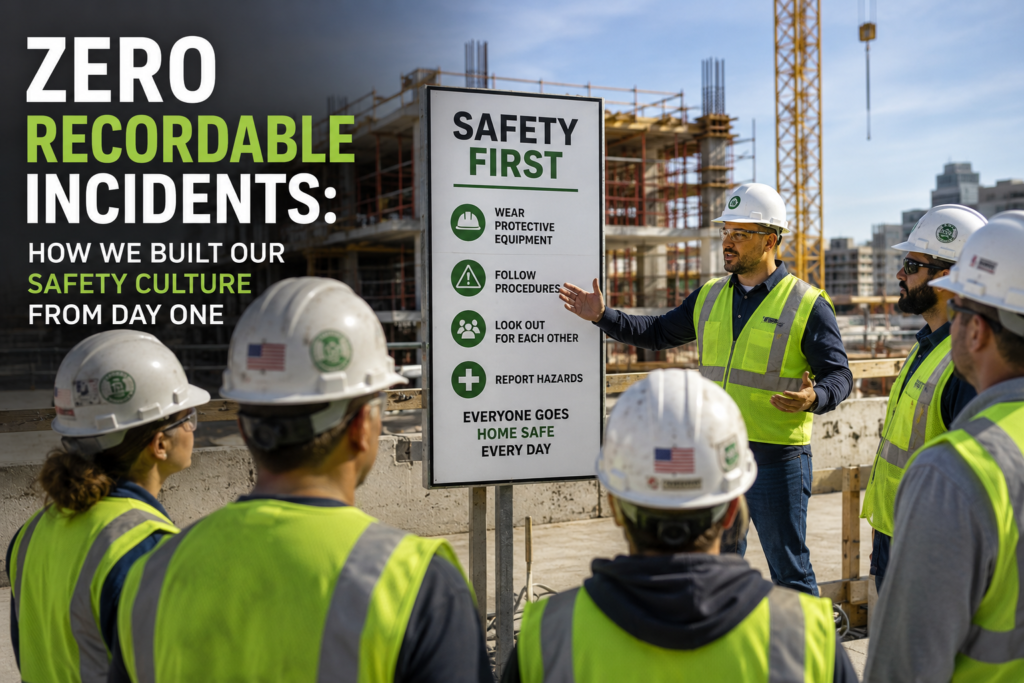
A 0.0 Total Recordable Incident Rate isn’t luck. Across four years of construction, remediation, and disaster recovery work — much of it on active storm-damaged sites — it’s the result of a Health, Safety, and Environmental program that treats safety as a daily practice, not a poster on the wall.

Safety starts before the crew arrives

Every site gets a job hazard analysis before work begins, not after an incident forces one. Our HSE team walks each site, identifies specific risks, and builds a plan around them rather than applying a generic checklist to every job.

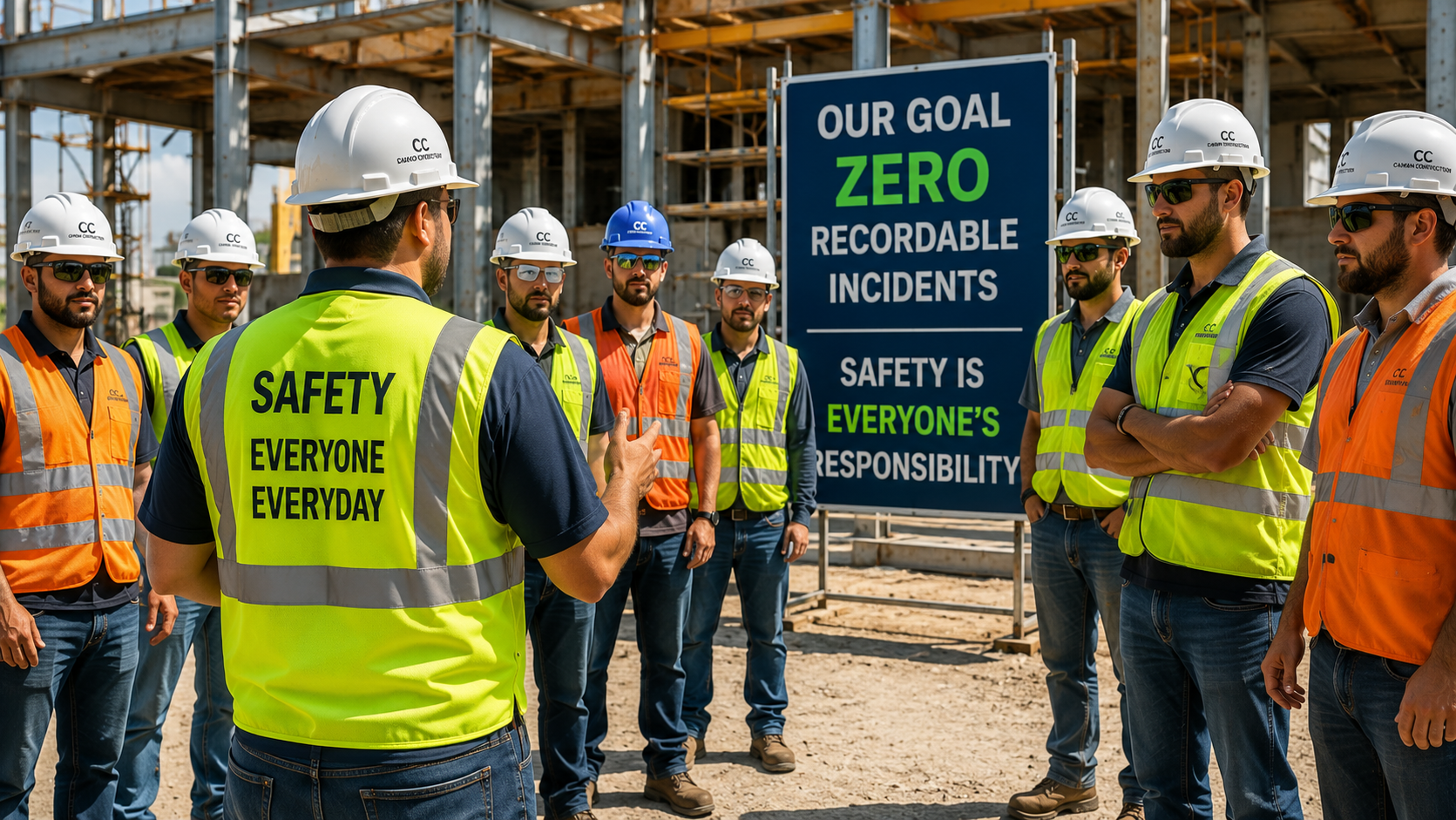
Field note — “Safety Everyone Everyday” isn’t just a slogan on our vests. Every crew member, regardless of role, has stop-work authority if something looks unsafe — no exceptions, no chain of command required.

The daily habits behind the number

Morning briefings happen on every site, every day, rain or shine. Crews walk through the day’s specific tasks and hazards together before a single tool comes out. It takes ten minutes and it’s the single habit our HSE director credits most for the record.


0.0

TRIR across 4 years
 

100%

Sites with daily briefings


4 yrs

Zero recordable incidents

What our HSE Program actually includes

Why this matters on disaster recovery sites

Our crews often work in the highest-risk environments in the industry — storm-damaged structures, active mold exposure, and post-hurricane job sites. Maintaining a zero-incident record in that kind of work isn’t about avoiding hard jobs. It’s proof the safety culture holds up under exactly the conditions it was built for.


Cayman Construction Team

Women-Owned Small Business delivering construction, A&E, and remediation services across Louisiana, Florida, and Missouri since 2022.
Want a partner who takes safety seriously?

Talk to our team about our HSE Program and safety record.

More from the blog

Remediation

5 Warning Signs of Mold Damage After Louisiana's Rainy Season

An IICRC-certified checklist for spotting hidden moisture damage before it becomes a bigger problem.

Safety

Zero Recordable Incidents: How We Built Our Safety Culture from Day One

A look inside our HSE Program and the daily habits behind a 0.0 TRIR across four years of operation.

Construction

Protecting Critical Infrastructure: South Lafourche Pump Stations

What a metal re-roof for a flood protection district involves — and why timing is everything.

Leave a Reply

Your email address will not be published. Required fields are marked *